

ResumeUp.AI Claims 500,000 Users. The Bigger Signal Is Conversation
ResumeUp.AI's reported 500,000-user milestone points to a bigger shift: job seekers increasingly expect career tools to work through conversation.

Half a million users allegedly walked into an AI resume tool, and the PDF still thinks this story is about fonts. It isn’t. ResumeUp.AI’s reported milestone and conversational builder point to a larger market signal: people don’t just want software that writes resumes. They want a career assistant they can talk to.
The headline claim comes from ResumeUp.AI Crosses 500,000 Users and Launches a Conversational AI Resume Builder - Carroll County Mirror-Democrat, dated 4 August 2026. A second syndicated listing, ResumeUp.AI Crosses 500,000 Users and Launches a Conversational AI Resume Builder - lincolnjournal.com, repeats the same announcement and date. That corroborates publication, not necessarily the underlying company metric, so the number deserves a sensible asterisk.
The 500,000-user claim is a signal, not a verdict
The supplied coverage gives us two concrete facts to examine: a claimed user count of 500,000 and a conversational AI resume builder launch dated 4 August 2026. It doesn’t provide audited adoption, active-user, retention or outcome data. Registered users can include everyone from daily customers to someone who opened an account while eating toast and never returned.
| Reported item | Value | What it tells us |
|---|---|---|
| Claimed users | 500,000 | Large stated top-line adoption |
| Announcement date | 4 August 2026 | Future-dated market announcement |
| Conversational builder | Launched | Chat becomes the creation interface |
| Active-user rate | Not disclosed | Engagement can’t be assessed |
| Interview rate | Not disclosed | Hiring impact can’t be assessed |
Still, dismissing the milestone would miss the point. Whether every account is active isn’t the only question. The useful signal is that an AI resume builder now sees conversation as important enough to lead its product story.
That aligns with the direction covered in Wipperoz’s Top AI Resume Builder Tools Review and Buying Guide in 2026: generation alone is becoming ordinary. The differentiators are guidance, evidence, adaptability and what happens after the first draft.
Conversational AI changes how people explain their value
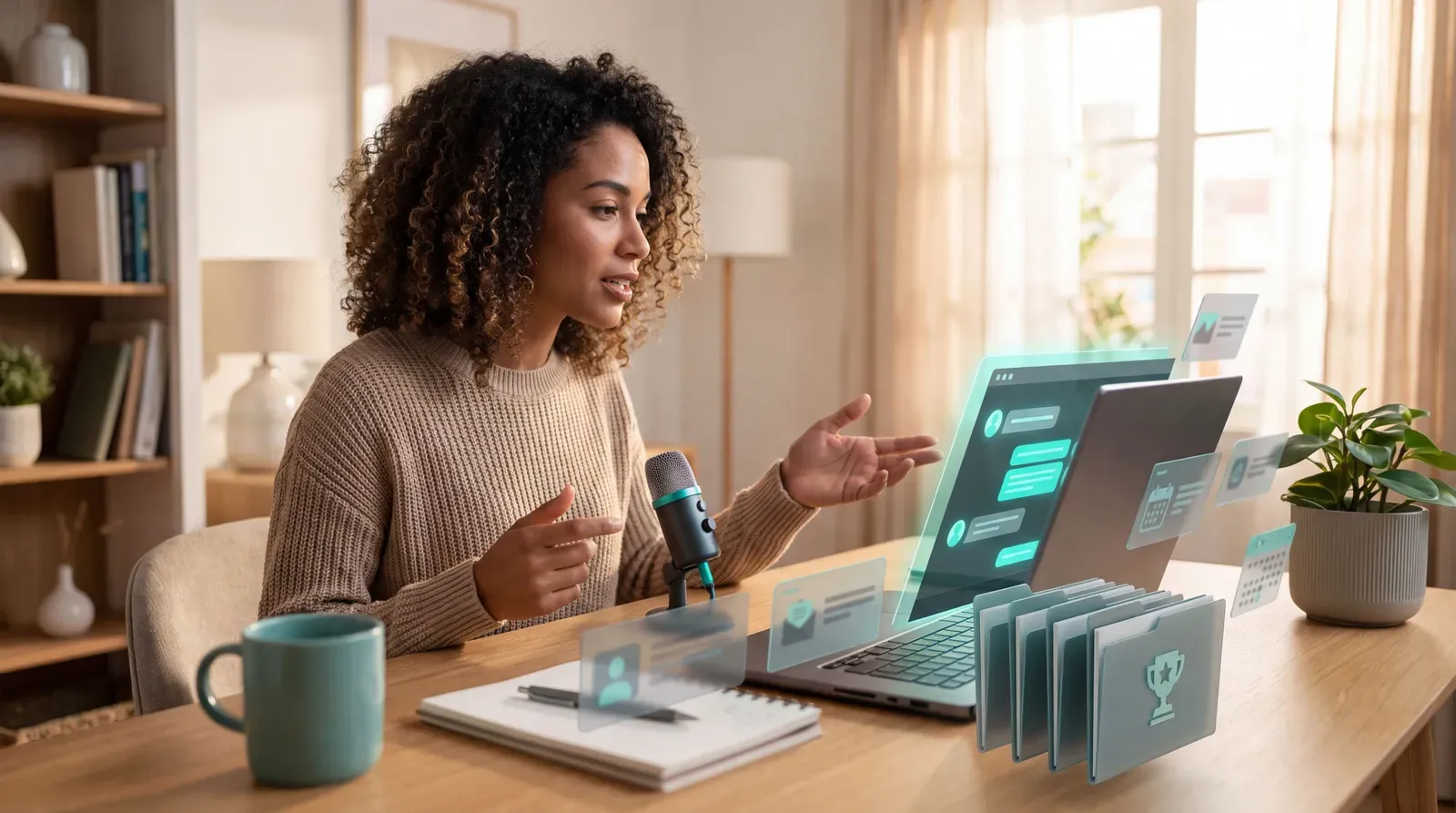
Search behaviour such as “help building resume free,” “how make resume,” “resume now” and “resume genius” reveals a practical frustration. People often aren’t asking for a blank template. They’re asking someone—or now something—to help extract a coherent story from messy working lives.
A conversational system can ask what happened, who benefited, what changed and how the result was measured. That’s more useful than dropping “team player” into a decorative sidebar and hoping a recruiter feels something.
Imagine entering: “I helped with customer complaints.” A decent assistant should ask follow-up questions:
- How many cases did you handle?
- Did response or resolution time improve?
- Which channels and systems did you use?
- Did you train colleagues or revise a process?
- What evidence could support the claim?
Those prompts help uncover substance, but the candidate must verify every answer. AI can structure memory. It shouldn’t manufacture history.
The same interface could eventually move beyond writing and into preparation. Once a system understands someone’s verified experience and a target role, it can generate tailored interview questions, identify weak examples and suggest areas that need evidence. That’s a far richer workflow than “make PDF, upload PDF, whisper prayer.”
The resume now has to become a living career record
Conversation improves input. It doesn’t fix the output problem by itself.
If a clever AI interview still ends by squeezing a human career into two static pages, we’ve built a spaceship and used it to deliver a fax. A better destination is a structured, updateable profile where candidates can present projects, skills, outcomes, media and context. The Wipperoz virtual CV shows what that shift looks like when the profile is designed for digital viewing rather than paper imitation.
This matters across Australia, Canada, New Zealand, England, Ireland, Scotland and the USA because candidates routinely apply across industries, career stages and accessibility needs. A digital profile can provide a concise recruiter view while keeping deeper evidence available for anyone who needs it.
Accessibility should be built in, not bolted on with sad little screws. Text to speech software and text speaking software may help some users consume profile content, but readable structure, keyboard navigation, useful alt text and plain language matter too. Adding audio to a confusing profile doesn’t make it accessible. It makes the confusion louder.
For job seekers weighing formats, Video Resume vs PDF Resume vs Virtual CV: Which Format Wins in 2026? offers a practical comparison. The key is matching the format to the role without making recruiters hunt for basic facts.
What job seekers should do with an AI resume builder
Use AI as an interviewer and editor, not as an autobiographical slot machine.
Start with a private evidence bank containing roles, dates, projects, responsibilities, tools, outcomes and approved work samples. Then ask the builder to challenge vague claims. If it suggests a percentage or dollar figure you can’t prove, delete it. Fiction with bullet points is still fiction.
A useful workflow looks like this:
- Capture your complete work history before tailoring anything.
- Turn duties into outcomes only where evidence exists.
- Compare the job description with your genuine skills and examples.
- Create a concise version for initial screening.
- Keep richer project evidence in a digital profile.
- Practise interview questions based on the final claims.
- Read every line aloud and remove language you wouldn’t naturally use.
You should also check how the document will behave in automated screening. How Does an ATS Filter Resumes? explains why clear structure and role-relevant language matter more than keyword confetti.
Recruiters need better signals, not more polished sameness

Conversational builders will make acceptable applications easier to produce. That’s good for candidates who struggle with writing, but it also means recruiters may receive more documents with smooth phrasing and suspiciously identical enthusiasm.
The answer isn’t to play amateur AI detective. Detection is unreliable, and polished language doesn’t reveal whether a claim is true. Recruiters should redesign screening around evidence.
Ask for a relevant project, work sample, structured skills response or brief explanation of a decision. Standardise interview questions around the capabilities needed for the role. Score candidates against consistent criteria. Give applicants room to explain context instead of rewarding whoever owns the shiniest verbs.
Recruiters should also measure their tools properly. A builder’s user count says nothing about hiring quality. Better measures include completion, qualified progression, interview conversion, time spent reviewing and candidate drop-off. Without outcomes, “500,000 users” is interesting—but it’s still only the queue outside the theatre, not a review of the show.
The ResumeUp.AI announcement matters because it shows where expectations are heading: careers described through guided conversation, converted into reusable structured information and carried into screening and interview preparation. The PDF resume won’t vanish overnight. Bureaucracy has excellent survival instincts. But its monopoly on professional identity looks increasingly absurd.
If your career is still trapped in a document named resume_final_FINAL_7.pdf, give it an escape route. Sign up for free and have your virtual CV ready in five minutes.
Common Questions
What is a conversational AI resume builder?
It's a tool that gathers career information through a chat-like exchange, asks follow-up questions and turns verified details into resume content. Its quality depends on the questions it asks and the accuracy of the user's answers.
Can an AI resume builder improve my interview chances?
It can help clarify relevant experience and tailor presentation, but it can't guarantee an interview. Role fit, evidence, application quality and the employer's screening process still matter.
Should recruiters reject resumes that appear AI-written?
No. Recruiters should assess whether claims are relevant and supported, using consistent criteria, structured interview questions and work evidence rather than guessing which tool produced the wording.
Is a virtual CV better than a PDF resume?
A virtual CV can present richer, updateable evidence, while a PDF may still be required by some application systems. Keeping a concise PDF alongside a structured digital profile is often the practical approach.
If you're comparing resume formats, explore video resume builder in Australia.
Ready to create your Virtual CV?
Join the people who stopped sending PDF resumes and started being seen.