
Hidden AI Prompts in Resumes: What Job Seekers and Recruiters Should Do
Candidates are hiding instructions inside resumes to sway AI screening. Here’s why it backfires, how to spot it and what ethical AI use looks like.

A resume should persuade a recruiter with evidence, not whisper secret commands to their software. Yet candidates are reportedly hiding AI prompts in resumes, hoping screening tools will rank them higher. It’s a clever trick in the same way putting a fake moustache on your application is clever: briefly amusing, fundamentally risky and unlikely to survive a proper conversation.
The warning matters to job seekers and recruiters across Australia, Canada, New Zealand, England, Ireland, Scotland and the USA. AI now sits inside more writing and screening workflows, but using it well is very different from trying to manipulate it.
What hidden AI prompts in resumes actually are
A hidden prompt is an instruction inserted into a resume for an AI system rather than a human reader. A candidate might use tiny text, a white font on a white background, metadata or an otherwise concealed line that tells an automated tool to treat the applicant as highly qualified.
The practice was highlighted in Job seekers are hiding AI prompts in resumes to influence hiring decisions, recruiters warn - People Matters - HR News, published on 8 September 2026. It reflects a larger problem: candidates don’t always know whether an AI tool is assisting, scoring or rejecting them, so some try to fight automation with automation.
That frustration is understandable. The tactic isn’t. Hidden instructions don’t prove capability, and they can look deliberately deceptive when exposed. If you’re searching “jobs that are hiring near me”, your time is better spent tailoring visible evidence than planting invisible commands.
Why prompt injection is a terrible resume strategy
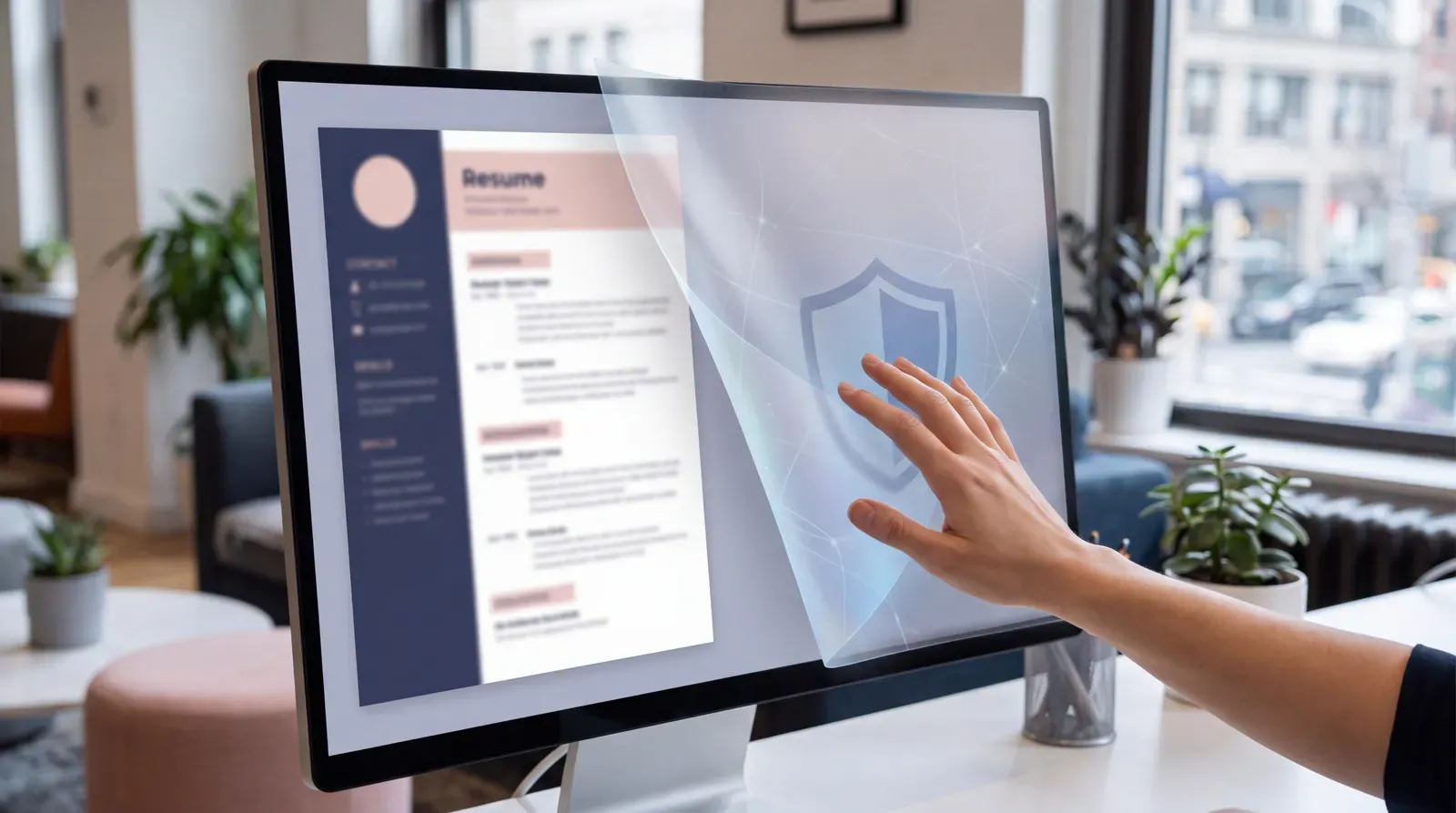
Prompt injection attempts to change how an AI system behaves by feeding it instructions through material the system is meant to evaluate. In hiring, that creates three immediate problems.
First, it attacks trust. A recruiter who finds concealed text may reasonably question what else has been manipulated. Second, it’s fragile: parsing software may ignore the prompt, strip its formatting or expose it as ordinary text. Third, it optimises for an imagined machine rather than the actual role.
The broader use of AI-generated resume content is already attracting scrutiny. A report covered by Cadient’s Authenticity Report Finds Up to 71% of Resumes Show AI-Written Content Amid Growing Scrutiny of AI Hiring said up to 71% of resumes showed signs of AI-written content. That figure doesn’t mean 71% were dishonest, nor does it prove authorship in any individual case. It does show why authenticity has become a live issue.
| Signal | Reported figure | Publication date | What it means |
|---|---|---|---|
| Resumes showing AI-written content | ███████░░░ 71% | 8 Sep 2026 | An upper-end reported finding, not proof of deception |
| Job seekers reached by one AI resume tool | 49,000 | 4 Sep 2026 | AI-assisted resume creation has meaningful adoption |
| Virtual CV public layouts from Wipperoz | 4 | Current product | Presentation can change without altering profile data |
| Wipperoz colour palettes | 5 | Current product | Candidates can vary appearance without hiding content |
The 49,000-user figure comes from UseResume AI Reaches 49,000 Job Seekers by Moving AI Inside the Resume Builder Instead of Beside It - Macau Business. It’s a company-reported milestone, so treat it as evidence of product reach rather than an independent market estimate.
How job seekers should use AI without gaming hiring
AI can be useful. Ask it to identify unclear sentences, compare your visible skills with a job description or suggest questions that expose missing evidence. Then verify every claim yourself.
A clean approach is explained in How to Pass Resume Screening: match the role’s language where it truthfully describes your experience, keep formatting readable and make achievements specific. You can also review AI Resume Builders Are Trending. Your Evidence Matters More for a simple principle: polished wording cannot rescue thin proof.
Using AI in your application
Keep a Google Sheets application tracker if it helps. A googlesheet can record the role, closing date, contact, version submitted and follow-up status. That’s useful automation. Filling the sheet with copied jobs and blasting out generic applications isn’t.
And skip decorative gifs, novelty font choices and market bait such as “dowjones today” unless they’re genuinely relevant to the position. Keywords aren’t magical beans. Recruiters and enterprises need evidence that you can do the work.
How recruiters can detect manipulation fairly

Recruiters shouldn’t respond by treating every AI-assisted sentence as fraud. Writing support, spellcheck and structured drafting are ordinary parts of modern work. The fair question is whether an application accurately represents the candidate.
Review suspicious resumes consistently
Extract the text
Compare the visible document with plain extracted text and metadata.
Inspect formatting
Look for tiny type, white text, unusual layers and content outside the page area.
Verify the evidence
Ask focused questions about claimed projects, decisions and measurable outcomes.
Document the decision
Record the job-related reason for advancing or rejecting the application.
Recruiters should also test their own systems. Submit controlled resumes containing harmless hidden instructions and see whether rankings change. Restrict automated tools to defined evaluation criteria, retain human review and never let arbitrary embedded instructions override the job rubric.
For a clearer view of the machinery, How Does an ATS Filter Resumes? separates parsing, search and screening from the science-fiction version candidates often imagine. Recruitment teams should tell applicants when AI materially affects assessment and provide an accessible route for questions or corrections.
Build evidence that survives both machines and humans
The deeper issue isn’t naughty white font. It’s that a PDF resume is a cramped proxy for a person, yet hiring systems keep asking it to carry identity, proof, communication and potential all at once. No wonder people try strange tricks.
A stronger application makes evidence easier to inspect. Use outcome-led bullets, portfolio links where relevant, peer endorsements that were actually written by colleagues and a short introduction that sounds like you. The Wipperoz virtual CV combines a short intro video with a structured profile and one-link sharing. It can also be tailored to a job without changing facts into fiction.
Recruiters benefit too. They get a clearer, more human starting point than another anonymous attachment named FINAL_RESUME_REAL_FINAL.pdf. Candidates can choose among four public layouts and five colour palettes, while the underlying information remains intact. Presentation matters. Concealment doesn’t.
Use AI as an editor, researcher and sparring partner—not as a tiny invisible lobbyist living between the pixels. Sign up for free and you can have your virtual CV ready in 5 minutes, with visible evidence recruiters can assess and a profile that feels like an actual person made it.
Common Questions
What is a hidden AI prompt in a resume?
It’s an instruction concealed in resume text, formatting or metadata that attempts to influence an AI screening tool rather than communicate with a recruiter.
Can an ATS detect white text in a resume?
Some systems may extract and expose white or tiny text, while others may strip or ignore it. Recruiters can also reveal it by selecting all text or reviewing a plain-text extraction.
Is it acceptable to use AI when writing a resume?
Yes, provided the final application is accurate and genuinely represents your experience. AI can improve clarity and tailoring, but candidates should verify every claim before submitting.
Should recruiters reject every AI-written resume?
No. AI-assisted writing isn't automatically dishonest; decisions should focus on accuracy, relevant evidence and consistent job-related criteria.
If you're comparing resume formats, explore video resume builder in Australia.
Ready to create your Virtual CV?
Join the people who stopped sending PDF resumes and started being seen.