
Navy Recruiters at Cardinal Company Signal the Future of Hiring
A Navy recruiting event isn’t just military news. It’s a hiring signal: visibility, proof, community, and better candidate matching now matter more than PDFs.

A Navy recruiting event in the American Midwest might sound like a narrow story. It isn’t. It’s a flashing hiring signal in uniform: the future of recruitment is becoming more visible, more local, more experiential, and a lot less obsessed with flat little PDF attachments.
The reported participation of Future Sailors and Navy recruiters from Navy Talent Acquisition Group Mid-America in the 68th Annual Cardinal Company event, covered by Future Sailors and Navy recruiters from Navy Talent Acquisition Group Mid-America take part in the 68th Annual Cardinal Company event - DVIDS, is one of those small public stories that says something bigger. Recruitment is no longer just “post job, wait, filter, reject, repeat until everyone is miserable.” It’s moving toward relationship-building, field presence, real-world proof, and candidate storytelling.
For job seekers and recruiters across Australia, Canada, New Zealand, England, Ireland, Scotland and the USA, that matters. Whether you’re applying through a temp employment agency near me search, checking staffing agencies close to me, preparing interview questions, or trying to make your vita cv less tragic, the same pattern keeps appearing: the organisations that win attention are the ones that show up with a clearer signal.
Cardinal Company is a recruiting lesson in plain sight
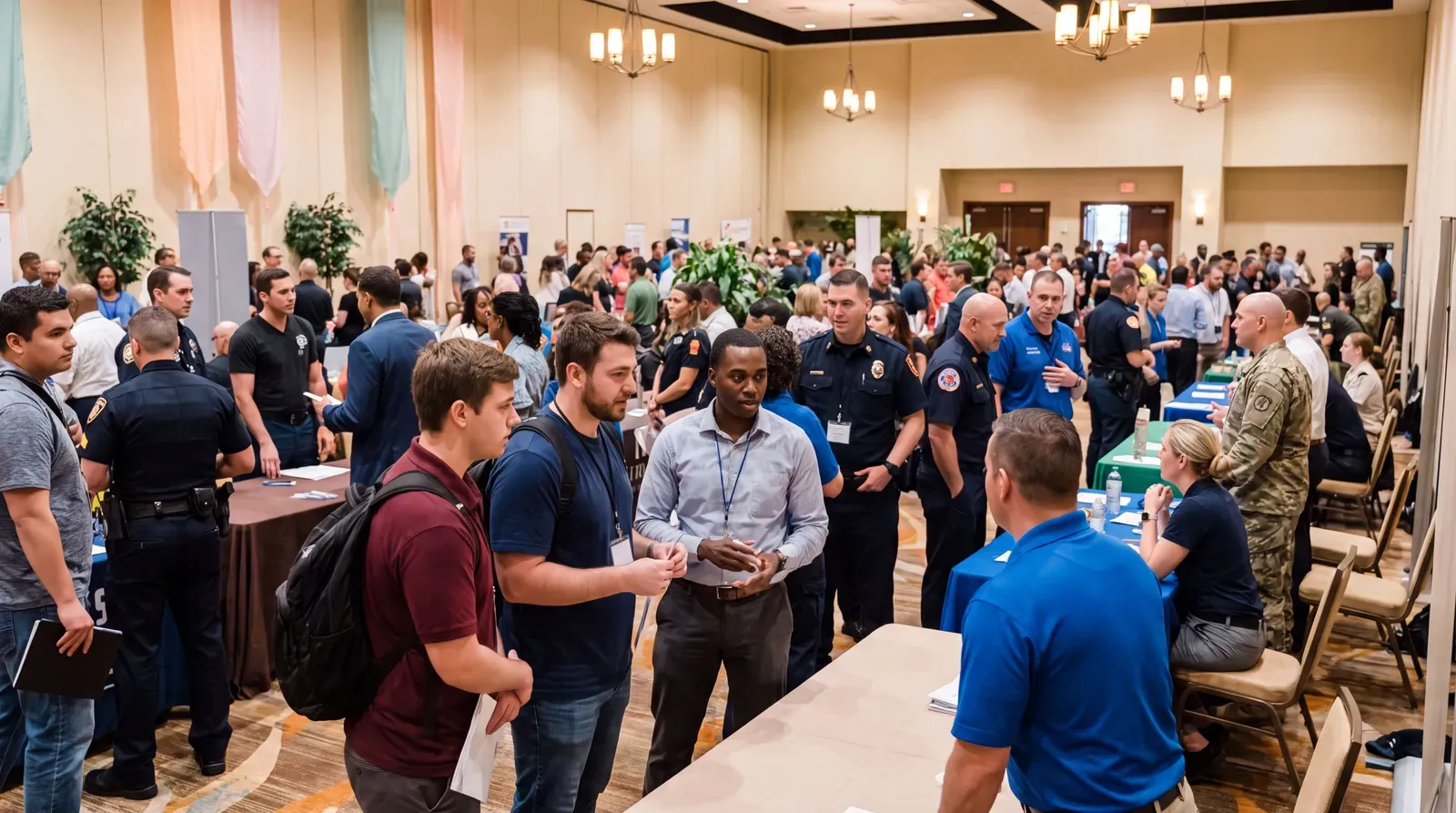
The Cardinal Company event is notable not because every job seeker is about to join the Navy. Obviously not. It’s notable because it shows a recruitment model that many employers are still weirdly slow to understand.
People don’t make career decisions from a job description alone. They make them from contact, clarity, identity, trust, momentum, and, yes, the feeling that someone actually sees them as a person rather than a file called final_resume_v7_REAL.pdf.
The DVIDS-linked report says the Cardinal Company event was in its 68th annual edition. That number matters. Sixty-eight years is not a campaign. It’s infrastructure. It’s community memory. It’s the sort of recurring, visible presence that makes recruiting feel less like cold outreach and more like an invitation.
| Signal from the event | What it means for hiring | Why it matters now |
|---|---|---|
| 68th annual event | Long-running community touchpoint | Trust compounds over time |
| Future Sailors involved | Candidates become proof points | Peers are more credible than brochures |
| Recruiters present in person | Questions answered live | Less friction, more confidence |
| Public participation | Employer brand becomes visible | Hiring can’t hide behind forms forever |
That last line is the big one. Hiring can’t hide behind forms forever. It can try. It has tried. It built applicant tracking systems, keyword filters, multi-page portals, and the occasional soul-crushing “create an account to upload the resume you already uploaded” ritual. But candidates are tired, recruiters are overloaded, and the PDF resume is creaking under the weight of things it was never designed to prove.
If you want the broader argument, Wipperoz has been banging this drum for a while in Are Resumes Outdated in 2026? The Truth About the Future of Hiring. The short version: the resume isn’t dead, but the old resume-as-everything model is absolutely on life support.
The PDF resume is too small for the job

Here’s the absurd part. We expect a one or two-page document to capture skills, communication, judgement, motivation, adaptability, proof of work, personality, and career direction. Then we flatten it into a format designed for printing. Then we ask software to parse it. Then we complain that hiring feels broken.
Come on.
A vita cv may still be useful as a baseline document, especially in academic, healthcare, technical, and government-heavy pathways. But the modern job market needs richer signals. Recruiters want to know what you can do, how you explain it, where you’ve applied it, and whether your claimed skills survive contact with reality.
That’s where a Wipperoz virtual CV fits the direction of travel. It gives candidates a way to present experience, evidence, media, context, and personality in one living profile. It’s not about making job seekers perform circus tricks. It’s about giving recruiters a clearer view than a static attachment can offer.
The same shift is showing up in niche recruitment tools too. The beauty industry, for example, is seeing specialist resume products emerge, as reported by SalonJobs Launches Industry-Specific Resume Builder to Raise Hiring Standards in Beauty - Salon Today. The angle is simple: generic career documents often fail to reflect the actual standards of a field.
That’s the market signal. Candidates are no longer one-size-fits-all paper people. They’re portfolios of proof.
Recruiters are becoming signal hunters
Recruiters in Australia, Canada, New Zealand, England, Ireland, Scotland and the USA are all facing variations of the same problem: too many applications, not enough confidence. More applications don’t automatically create better hiring. Sometimes they just create a bigger haystack and a more exhausted human with coffee gone cold.
This is why recruiters increasingly care about signals that sit outside the traditional resume. Referrals. Work samples. Short videos. Verified skills. Community participation. Events. Digital profiles. Structured answers. Even the way someone responds to an interview question and follows up afterward.
A public recruiting event like Cardinal Company is basically signal generation in real life. Candidates see the organisation. Recruiters see candidates engage. Future Sailors become living examples of the pathway. Questions get answered before the application starts. That’s smarter than waiting for a PDF to land in a database and hoping the right keywords behave themselves.
For recruiters, this doesn’t mean abandoning structure. It means improving the inputs. If you’re still screening mainly by document formatting, you’re probably filtering out useful people. Wipperoz covers that mess in How Does an ATS Filter Resumes?, because yes, machines can help, but they can also quietly reject good humans for very silly reasons.
For job seekers, it means your goal isn’t simply to “have a resume.” Your goal is to create enough useful evidence that a recruiter can say, “I understand this person quickly.” That’s the game now.
Search behaviour shows the market is anxious
Look at the keywords people are typing: temp employment agency near me, staffing agencies close to me, interview questions, interview question and answer ideas, vita cv, GCU, canyon university, g c u student portal. It’s a strange little bundle, but it tells a coherent story.
People are trying to get unstuck.
Some are looking for fast work through agencies. Some are students navigating systems such as GCU or the g c u student portal. Some are preparing for interviews. Some are rebuilding their CV from scratch. The common thread is career movement under pressure.
And pressure changes behaviour. Candidates don’t just want inspiration. They want tools, shortcuts, confidence, and something that makes them look credible before the recruiter has mentally wandered off.
| Search theme | Candidate intent | What recruiters should notice |
|---|---|---|
| temp employment agency near me | Fast access to work | Speed matters |
| staffing agencies close to me | Local hiring support | Proximity still has power |
| interview questions | Preparation and anxiety | Candidates need clarity |
| vita cv | Better career presentation | Format still confuses people |
| gcu and canyon university | Student-to-work transition | Early talent needs guidance |
None of those searches means the candidate is lazy. It means the labour market has become noisy and candidates are trying to find a doorway. Recruiters who make the doorway clearer will win better attention.
This is also why content and candidate experience matter more than most employers admit. A bland careers page and a broken application form are not neutral. They’re anti-recruitment devices wearing a tie.
What job seekers should take from this
If the Cardinal Company story has a lesson for candidates, it’s this: don’t rely on being discovered from a static document alone. Build a presence that travels with you.
That can include a clean CV, yes. It can include LinkedIn, if you use it well. It can include a portfolio, a short intro video, examples of projects, certifications, testimonials, or even a simple explanation of what you’re looking for next. The point is not to add noise. The point is to reduce doubt.
A recruiter doesn’t need your life story. They need a fast, credible answer to three questions:
- What can you do?
- Where have you shown it?
- Why are you worth a conversation?
If you’re preparing for interview questions, don’t memorise robotic scripts. Build stories. Use real examples. Explain the situation, the action you took, and what changed because of it. Keep it human. Recruiters can smell copy-paste confidence from across the internet.
If you’re moving through a student pathway, whether that’s GCU, canyon university-related searches, a college portal, or another education-to-work transition, start collecting proof early. Projects. Placement experience. Volunteer work. Leadership moments. Customer service wins. Anything that shows behaviour, not just intention.
For more practical format thinking, Digital CV vs Paper CV breaks down why a digital-first profile can carry more useful context than a document built for a printer tray.
What recruiters should steal from the Navy playbook
Recruiting teams don’t need a military-style event to learn from this. They need the principle: go where trust can be built before the application.
That might mean school visits, university sessions, local employment partnerships, trade events, virtual open days, alumni networks, community groups, or targeted talent communities. It might mean asking current employees to become visible ambassadors. It might mean letting candidates ask awkward questions before they apply. Good. Let them.
The Navy recruiting example also highlights the power of identity. People are not just choosing a job title. They’re choosing a story about who they could become. Civilian employers often forget this and then wonder why their job ads sound like appliance manuals.
Recruiters should make three moves now:
- Show the work, not just the role description.
- Put credible people in front of candidates, not just polished brand copy.
- Give candidates a better way to demonstrate fit than uploading another PDF into the void.
The labour market commentary around hiring tools is getting louder because the old pipeline is straining. Even coverage like Tech-related hiring in India at all time low, software engineers hit hardest: Study - India Today, while outside this article’s target markets, reflects a broader warning for global talent conversations: when hiring tightens, weak signals get punished first. In the markets we’re focused on here, that means candidates need sharper proof and recruiters need cleaner evaluation.
Wipperoz has argued this from another angle in The Peg Bag Resume Problem: Why Hiring Needs Better Signals. The resume pile is not a talent strategy. It’s a sorting ritual. And rituals are only useful if they still work.
The new hiring signal is proof plus presence
The Cardinal Company event is a reminder that recruitment has always been partly human theatre. Not fake theatre. Real theatre. People meeting people. Futures being imagined out loud. Questions asked. Doubts softened. Signals exchanged.
Technology should not replace that. It should scale the best parts of it.
A strong virtual CV can’t shake a recruiter’s hand, but it can carry a candidate’s story better than a static file. It can show projects, explain context, link evidence, and keep evolving. For recruiters, it makes screening less like decoding a fossil. For candidates, it turns “please trust me” into “here’s what I’ve done.”
That’s where hiring is heading across Australia, Canada, New Zealand, England, Ireland, Scotland and the USA. Less blind filtering. More proof. Less formatting theatre. More useful context. Fewer dead PDFs floating around inboxes like tiny career ghosts.
And yes, the old systems will hang around. People still fax things in some corners of the world, somehow. But the direction is obvious. Candidates who build richer signals will stand out faster. Recruiters who look beyond the document will make better matches.
If you’re still waiting until the perfect job ad appears before improving how you show up, flip the order. Build the signal first. Sign up for free at Wipperoz, create your virtual CV, and have it ready in 5 minutes — because when the right recruiter finally looks your way, “I’ll send you my PDF later” is not exactly the mic-drop moment you want.
Common Questions
Why is a Navy recruiting event relevant to civilian hiring?
It shows a broader recruitment shift: candidates respond to visible, human, trust-building experiences. Civilian recruiters can use the same idea through events, talent communities, employee ambassadors, and richer candidate profiles.
Is a virtual CV meant to replace a traditional resume?
Not always. A traditional resume can still be useful, but a virtual CV adds context, proof, links, media, and personality that a flat PDF often can’t carry.
What should job seekers focus on besides interview questions?
Prepare real examples that show skills in action. Recruiters usually want clear evidence of what you did, how you handled challenges, and what result followed.
What can recruiters learn from community-based recruiting?
Community-based recruiting builds trust before the application stage. It gives candidates a clearer view of the role and gives recruiters better early signals than a document alone.
If you're comparing resume formats, explore video resume builder in Australia.
Ready to create your Virtual CV?
Join the people who stopped sending PDF resumes and started being seen.